
In Focus
Yemen LNG seminar reconfirms commitment to Health, Safety & Environment
 19 June 2007
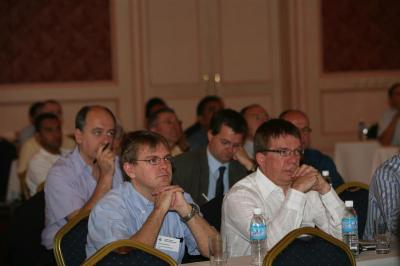
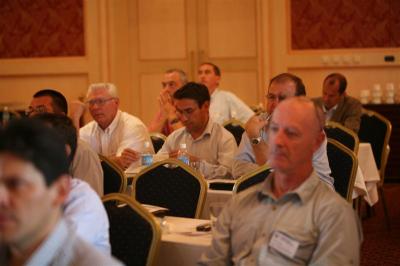
Yemen LNG held an important Health, Safety and Environment Seminar at the Movenpick Hotel in Sana’a from June 19th to 21st June 2007 to reinforce the company’s HSE policy and focus on the importance of maintaining the highest possible standards in these important areas. Yemen LNG company officials as well as contracting companies’ representatives were in attendance.
Mr. Joel Fort, the General Manager of Yemen LNG, opened the gathering by emphasising that this was not just another seminar. Rather, he said that along with security, “it is the subject of highest importance in our activity.”
Fort said that the overall HSE performance at the Balhaf site is still excellent, but that there was some cause for concern in light of a number of recent accidents, particularly involving vehicle roll-overs and collisions, and accidents associated with working at height, which account for 60% of all incidents. Unfortunately, the Yemen LNG project witnessed its first fatality on 17th June 2007 when a worker fell from a tower.
“In order to continuously improve our collective HSE performance, we need to focus on the following management actions: Leadership by example; Training and Awareness; Active participation by all contractors in supporting teams,” said Fort. Leadership by example puts particular onus on the line management to promote behaviours consistent with Company standards by exhibiting them consistently and without fail. As far as the training and awareness dimension is concerned, Fort stated that the Company’s health, safety, social and environment departments had been given substantial budgets which were well ahead of the industry norm; however, he conceded that as the workers at the Balhaf plant had typically not had a significant exposure to “hazardous industry,” the budgets allocated to health and safety implementation would be constantly under review.
Fort also spoke about the behavioural dimension of HSE, which requires “thought modifications” in the sense that there is a need for a “complete and realistic change toward safer behaviours”. Fort concluded by emphasising the need for rigour and that there is no room for complacency as regards health and safety standards.
An HSE official within Yemen LNG Kombiz Hashemi reaffirmed the need for quality management of HSE standards, whereby commitment to HSE can be ensured and guidance provided.
Hashemi saw the seminar as an opportunity to promote good working relationships between all parties involved in the Project by actively listening and exchanging views about the different challenges they are faced with, as well as identifying challenges and potential HSE issues in a proactive way.
Yemen LNG’s Project Manager, Mr. Jean-Luc Boisset, explained at length to the seminar’s participants the Company’s policy regarding HSE, and discussed how the policy was being implemented in real terms.
First and foremost, Boisset noted that the policy’s objective was to ensure that any and all risks to personnel, the environment and Company assets were clearly and demonstrably identified. Second, the policy also attempts to develop a persuasive and systematic approach to reducing risks, thereby simultaneously ensuring both human safety and environmental protection.
Boisset praised the Company’s management in meeting HSE standards and objectives, noting that they had shown demonstrable leadership in this area. Resources necessary to implement an exemplary job were also being provided. “The level of risk has been modified and we have managed to avoid hazardous occurrences.”
According to Boisset, the Company has a strong enthusiasm to prevent all accidents and incidents of an environmental nature so long as HSE rules are assiduously followed. “We cannot look at any HSE issue and say that we cannot prevent it from happening.” In the event that a health and safety challenge emerges, there is “an obligation” to find a solution, he said.
Important tenets of operational safety that Boisset highlighted include the idea that while ensuring HSE policy compliance is the responsibility of line management, it is nevertheless ultimately the responsibility of every individual working in the project. Every worker should feel as compelled to follow HSE best practice as the management is expected to, according to the Project Manager. He echoed the sentiment of Fort by reiterating the need for leading by example.
“If a manager is seen to wear a helmet, the employee will do the same,” said Boisset.
Plant construction at the Balhaf site is running on schedule, due in no small part to a rigorous work ethic. And while the sense of import of completing the project on time was palpable, this does not mean that there is any room to cut corners in the area of HSE in order to meet the deadline.
“No job is so urgent that it cannot be done safely,” Boisset said.
Lack of rigour in following HSE policy leads to accidents, and accidents have far reaching business-related consequences, he said. Apart from the immediate costs of providing care for injured personnel who, according to Boisset, should return to their families in the same physical condition as they arrived in, and the cost to repair or replace damaged equipment, there are legal implications involved with HSE accidents that can be wide-ranging and long-lasting. “Good HSE performance is positive for business and for a Company’s image and reputation in the short and long term.”
Robert Hirst, Health Safety, Social & Environment Manager, talked about Yemen LNG’s corporate HSSE activities and the Company’s commitment to environmental awareness and to a sustainable development approach. Whenever or wherever the project has an impact – be it social, environmental, or socio-economic – the company is committed to eliminating or mitigating that impact by redesign. However, if elimination of the impact is not completely effective, there are appropriate measures provided to offset any negative impacts. Finally, the Company is committed to provide investment in a way that will promote sustainable long-term development within affected communities.
This policy has already generated a number of compensatory development projects, both along the pipeline route and also in the communities around the Balhaf site. To mitigate the impact of plant construction on local fishermen, Yemen LNG is revamping two local fish auction sites, improving access roads to both sites, provided Fish Aggregation Devices that will help ensure that fishermen are able to net large catches while fishing in off-shore waters. One major project which is currently nearing completion is a multi-million-dollar breakwater at Gela’a, which will provide safe anchorage for fishing boats, especially during the monsoon season.
Yemen LNG’s concern in maintaining biodiversity and in negating any environmental impacts is most apparent in the care taken to protect sensitive coral communities, by the use of careful constructional techniques and by a novel project which involves the transplantation of over a thousand corals located inside the Balhaf bay to an area where they would not be affected by plant construction or operation.
“We are here to make a major and sustainable contribution to the socio-economic conditions around our sites and to provide a legacy and to continually improve our relations with our project neighbors for a duration of over 20 years,” said Hirst. He also added that Yemen LNG intends to leave the environmental richness and biodiversity around the plant in the same, or better condition, than before the project commenced.
|
|
|